- Optimized Primate Newsletter
- Posts
- Burnout Isn't a Phase. It's a Systemic Failure. This Is Your Anti-Fragile Rebuild & Domination Protocol.
Burnout Isn't a Phase. It's a Systemic Failure. This Is Your Anti-Fragile Rebuild & Domination Protocol.
Stop treating a biological crisis with 'time management' hacks. This isn't about scheduling your misery better, it's about tearing down the dilapidated shack you call a nervous system and rebuilding it into a fortress.

Luis Arauz
September 14, 2025 • Estimated Reading Time: 10 minutes

You don't need another productivity app. Notion, Todoist, that weird one with the tomato timer— I deleted every single one after three days of pretending I'd stick with any of them. I needed to stop pretending I could spreadsheet my way out of whatever this is.
Burnout. But it's just... tiredness? I just need to take a nap during the afternoon. I remember thinking burnout meant I needed a long weekend. Maybe a massage. Turns out it's more like my entire nervous system was screaming while I was sit in meetings nodding about how my client was installing a new piece of software.
I used to be one of those people. You know the type casual humble-brags about grinding and telling people I'll sleep when I'm dead without a trace of irony. Responding to emails at 2:47 a.m. as if anyone needed an answer at 2:47 a.m.
The really messed up part? I was actually kind of proud of it I still am now. 80 hour weeks were my personality. Hell, I remember pulling a 72 hours work weekend, I didn’t sleep for 3 days straight. I cringe writing that. I remember days when my wife would find me passed out on my laptop, drool on the spacebar, and I'd wake up with 5 pages of L's on my screen and defensive about how I was "almost done" with something that absolutely did not matter.
Triple-shot lattes and half the container of sugar. My eye started twitching sometime in 2019 and just... never stopped. That startup-founder-grey-skin look? That was me, except I wasn't even a founder. I was middle management or working IT support at a company that made software or built data centers for people with more money than sense.
The breaking point was stupid. It's always stupid. Mine was when I had to drive a friend of mine down the backroads of a hill top data center at 11pm because the owner of the company wouldn't trust the electrician they hired to certify the safety of the equipment they were installing. The electrician was forced against his better judgement to energize the unit and there was a catastrophic malfunction. A 20 min ride down a mountain in the dark and a helicopter ride to a major hospital in the city. My phone wouldn't stop buzzing—Telegram, email, phone calls, explaining to everyone what had happened. And then being told that it was the fault of the electrician and that I needed to start figuring out the next steps to get things back online.
20 minutes later I was in my hotel room, talkin to my wife trying to explain to her why I couldn't stop shaking because of how angry and tired I was.
Here's what nobody tells you: your brain isn't just tired. It's literally rewiring itself around the chaos. Every notification, every urgent-but-not-important request, every Sunday night email—it's training you. You become the dog that salivates when the bell rings, except the bell never stops ringing and eventually you forget what you were even salivating for.
The solution isn't better boundaries or meditation apps or whatever HR is pushing this quarter. It's admitting the whole thing is broken. Not just unsustainable—broken. The game everyone's playing? Where exhaustion equals dedication? Where being available 24/7 means you care? It's bullshit. Complete, total bullshit.
But saying that out loud? At work? Career suicide.
So here I am, writing this at a reasonable hour, with my phone in another room, trying to remember what I used to think about before I turned into a notification-response machine. Turns out it's hard to rebuild a personality after you've spent years letting a company rent space in your head for free.
The eye still twitches sometimes.
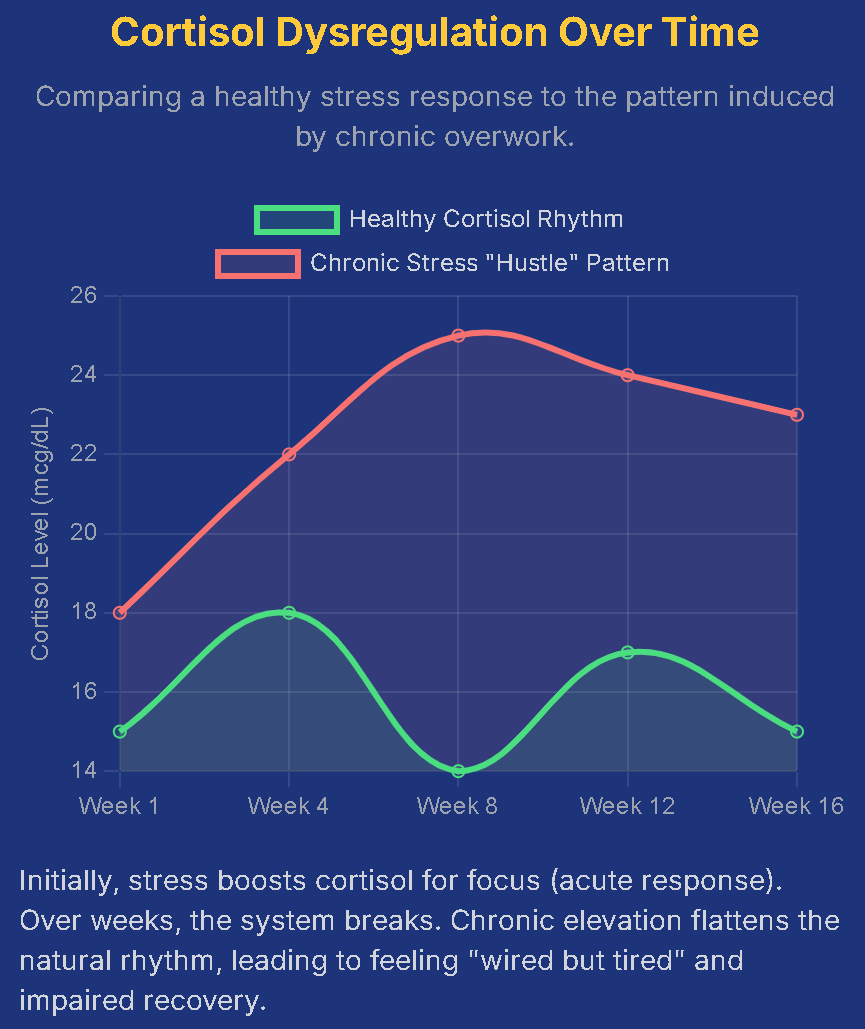
This isn't about being weak; it's about recognizing the game is rigged to turn you into a broken shell. And the only way to win is to break the cycle and build a system that doesn't just survive chaos, but thrives on it.
Part I: Your body and brain are a single, interconnected system.
Chronic stress floods your system with cortisol - your body's stress hormone - when it's constantly elevated by your need to always be on, it shrinks your hippocampus—the part of your brain responsible for memory and learning.
So, yeah, that fuzzy brain, those forgotten details? You're literally losing the capacity to think. Your decision-making becomes impaired, creativity flatlines harder than a Korean drama character who’s been killed off three times and that relentless pursuit of more downregulates your dopamine receptors, creating a dopamine deficit where even big wins feel meaningless.
The hustle culture isn't building you up; it's systematically making you less effective, less capable, and fundamentally, breaking you down, little by little.
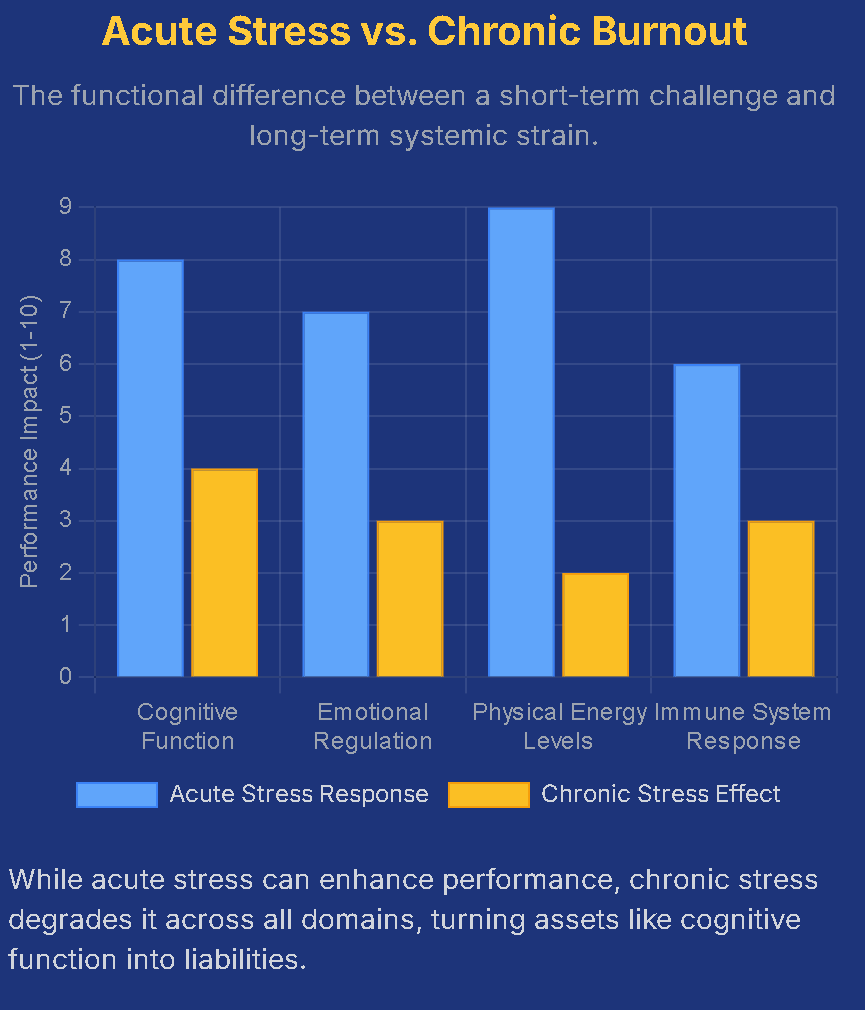
This isn't sustainable; it's a slow-motion car crash.
The solution isn't more breaks or better time management—that's like treating a chemical fire with a spray bottle. This isn't about recovery; it's about building anti-fragile systems that don't just resist stress, but actually get stronger from it. You're not just surviving the fire; you're becoming the fire.
Dopamine Homeostasis: Reclaiming Your Pleasure/Pain See-Saw.
Out primate brains crave novelty and reward—that’s how we're wired to survive.
But constant, random stimulation (like the constant emails, the pressure to meet deadlines, or the constant urgent task) turns your pleasure-pain See-Saw into a broken teeter-totter where you're always chasing the next high just to feel normal.
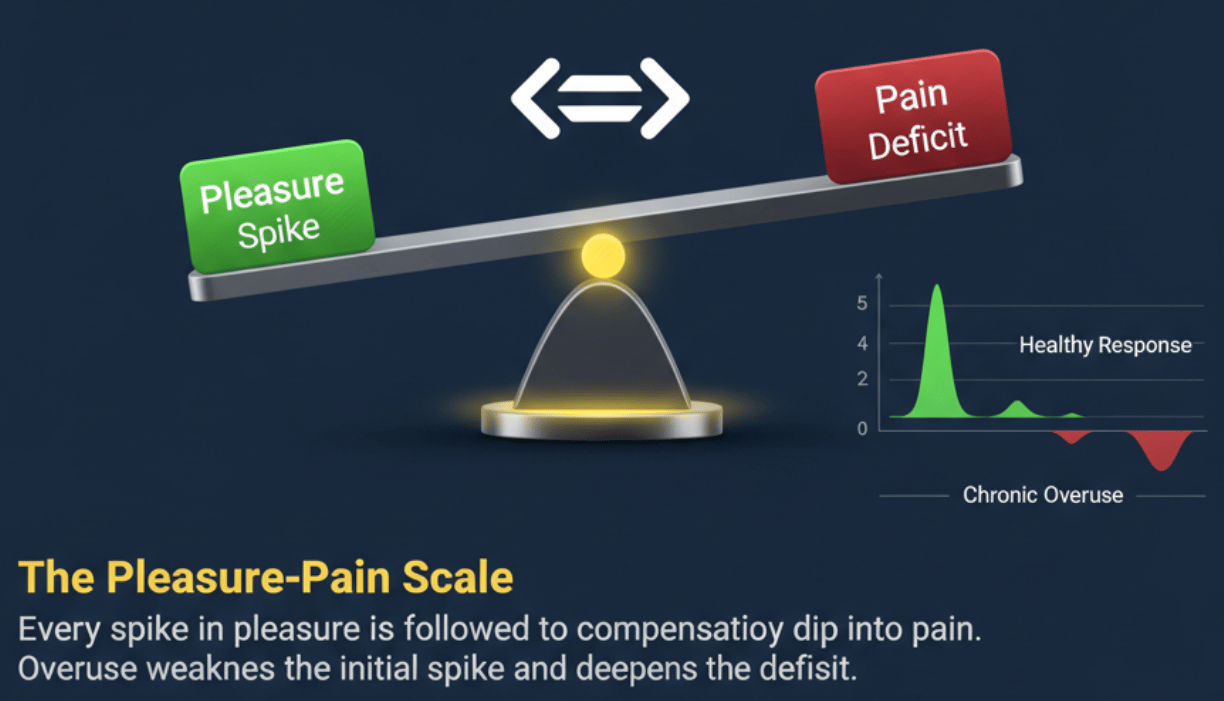
The strategy isn't to become a monk, but to strategically induce voluntary discomfort and absolute abstinence from these over-stimulating triggers. This recalibrates your dopamine receptors, restoring baseline contentment and making actual effort meaningful again, rather than just another desperate, shallow fix.
Polyvagal Somatic Integration: Decoding Your Body's Language, Your Gut Knows More Than Your MBA
Stress isn't just a thought. It's physically stored in your body like toxic sludge, twisting your fascia and tying your organs in knots.
You can't out-think a clenched jaw or a perpetually churning gut. By developing raw somatic awareness—listening to what your body is actually screaming, not just what your stressed-out, over-caffeinated brain thinks—and activating the "ventral vagal" state (that sweet spot of safety and connection that tells your nervous system to stand down), you can actually release that trapped, performance-killing stress.
This isn't woo-woo; this is hard-core neuroscience.
It enhances emotional regulation, stops you from exploding in meetings, and, crucially, grants you unshakeable access to higher-order thinking when the shit hits the fan.
This isn't a wellness routine of seaweed wraps, scented candles, and the soft music. This is a strategic system upgrade for leaders who demand sustainable, exponential performance. We're not patching you up; we're forging you into something stronger, more adaptable, something that rises from the ashes of the old grind to dominate.
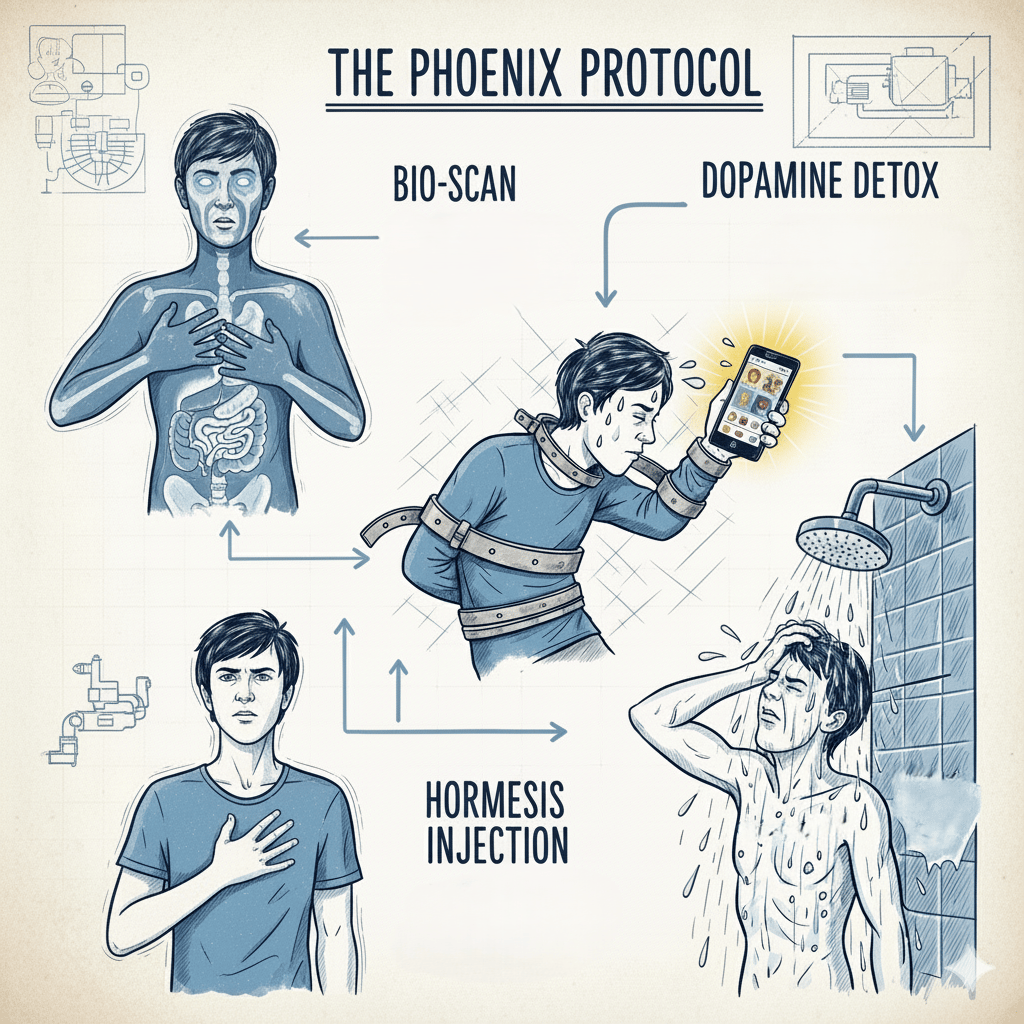
The 7-Day System Build
Phase 1: The Bio-Scan & Trigger Lockout (Days 1-3)
Objective: Stabilize your baseline and identify your triggers for a temporary, voluntary block or lockout. Let’s face it you're a leaky boat, and you can't patch anything till you know where the goddamn holes are. You can't fix what you don't measure, and you sure as hell can't escape what you don't identify.
Action:
Morning Body Scan (5 min): Before the caffeine hits, before your digital crack pipe is in your hand, collect data. Where is the tension actually living in your meat suit? Jaw, shoulders, gut? Focus on that area and breathe into it. This isn't some fluffy relaxation exercise; it's intelligence gathering. Your body is screaming; it's time to listen.
Trigger Abstinence: Identify ONE major work-related trigger that causes constant, insidious stress. You know the one. The one that makes your gut clench or your jaw tighten just thinking about it (e.g., no emails after 7 PM – seriously, the world won't end; no social media for business before noon – your ego can wait; no checking analytics before coffee – the numbers aren't going anywhere).
Commit to a hard, non-negotiable 3-day lockout. This is a neurochemical reset, cutting the cord to your self-inflicted misery.
Evening Journal: Before you pass out from another day of grind, grab a journal and ask: "What does my body actually need right now, beyond what my stressed-out brain thinks it needs?" Track your daily energy 1–10.
Be honest with yourself, if your 3-day average is still less than a 7, you're not trying hard enough. Double down: cut two triggers instead of just one. This is about learning your own damn system before it completely collapses.
Phase 2: Dopamine Detox & Deliberate Discomfort (Days 4-5)
Objective: Downregulate overstimulated reward pathways and build anti-fragile adaptation through hormesis.
Action:
Deep Work Block: Implement one uninterrupted 90-minute deep work block. No phone. No notifications. Rebuild your capacity for sustained attention without the dopamine-spike interruptions that cripple your concentration.
Track phone cravings: log each time you reach for your phone during deep work. If its more than 3 in 90 minutes, extend the detox by one day. Your goal is for less than 2 reaches in 90 minutes.
Hormesis Injection: Take a 2-minute cold shower. Yeah I know, this isn't supposed to be fun. It's a controlled stressor that triggers endogenous dopamine release, building actual, biological resilience.
Yes, it sucks. That’s the point. You’re not training to enjoy discomfort, you’re training to stop crying when Wi-Fi drops for 30 seconds.
Rate your mood immediately after on a 1–10. If the number isn’t at least 2 point higher from baseline, extend duration by 30 seconds. Simple math: discomfort in, resilience out.
Phase 3: Forging Your New Reality (Days 6-7)
Objective: Integrate the brutal lessons learned and establish ongoing anti-fragile practices. This isn't about feeling better, it's about making this new operating system permanent.
Action:
The Iron Metric: Pick one metric to keep doing: average sleep hours, deep work blocks completed, or subjective energy. Anything above 80% of your target for this chosen metric is the goal for next week’s protocol. This is your personal KPI for survival and domination.
Weekly System Review: Conduct a no-bullshit autopsy of your week. What worked? Where did you spectacularly fail? What are the patterns trying to pull you back into the old grind? Its like crabs in a bucket. Time to call out your own weaknesses.
Resonance Scale: Rate your internal landscape: mind:growth | body:mastery | spirit:relations/acceptance | vocation:purpose. Be honest. Where's the weak link in the system? That's your next target. Plan the next micro-intervention with surgical precision. This is how you close the loops and become truly unbreakable.
Part II: Dominating the External Game
Alright, you’ve rebuilt the engine. It’s running clean and powerful. Congratulations. Now, what are you going to do with it? Let it sit on your wall collecting dust? You didn't crawl through that biological hell to feel calm. You did it to become dangerous.
Resilience without a strategy is just survival. You've built a strong foundation, but without a clear path forward to leverage that strength, you're simply weathering the storm instead of charting your course.
Forget the quick fixes, I once thought buying a standing desk would fix everything. Turns out, standing while miserable just makes you a taller idiot.
Pillar 1: Weaponize Your Clarity
Your greatest weapon is no longer "hustle." It's cognitive endurance. The ability to think clearly and creatively for sustained periods when everyone else is fading is the ultimate unfair advantage. And there are some ways you can engineer that to your benefit.
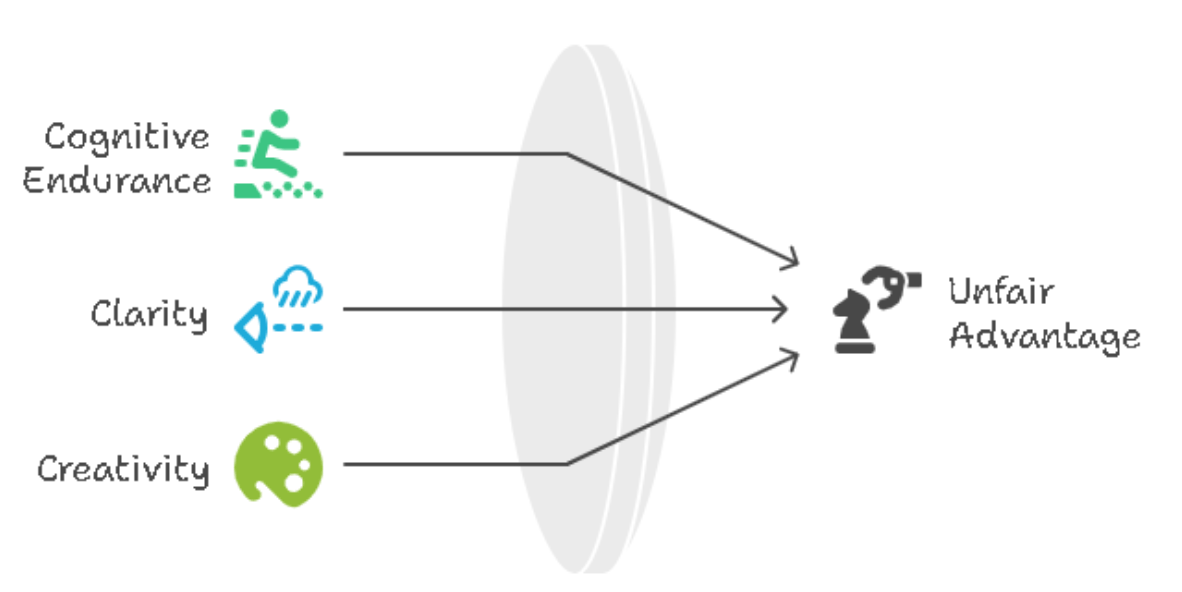
The Endurance Gambit: Schedule your high-stakes strategic and creative assaults for 3-5 PM. While their brains are melting down, yours is just warming up. You'll operate with a precision they can't even fathom.
Forcing Errors: In negotiations or critical projects, set a pace of deep, focused diligence that you can sustain but they can't. Your relentless clarity will expose the flaws in their fuzzy, burnt-out thinking. Let them break themselves against your resilience.
The "Second Order" Sprint: Use your newfound energy not just to do more work, but to think two moves ahead. While they're trapped in the tyranny of the urgent, you will operate in the realm of the important, architecting the future while they fight fires in the present.
Pillar 2: Rig the Game So You Can't Lose
Willpower is a finite resource for amateurs. True operators don't rely on it; they design environments where the winning choice is the easiest choice. This is about making your anti-fragile system automatic.
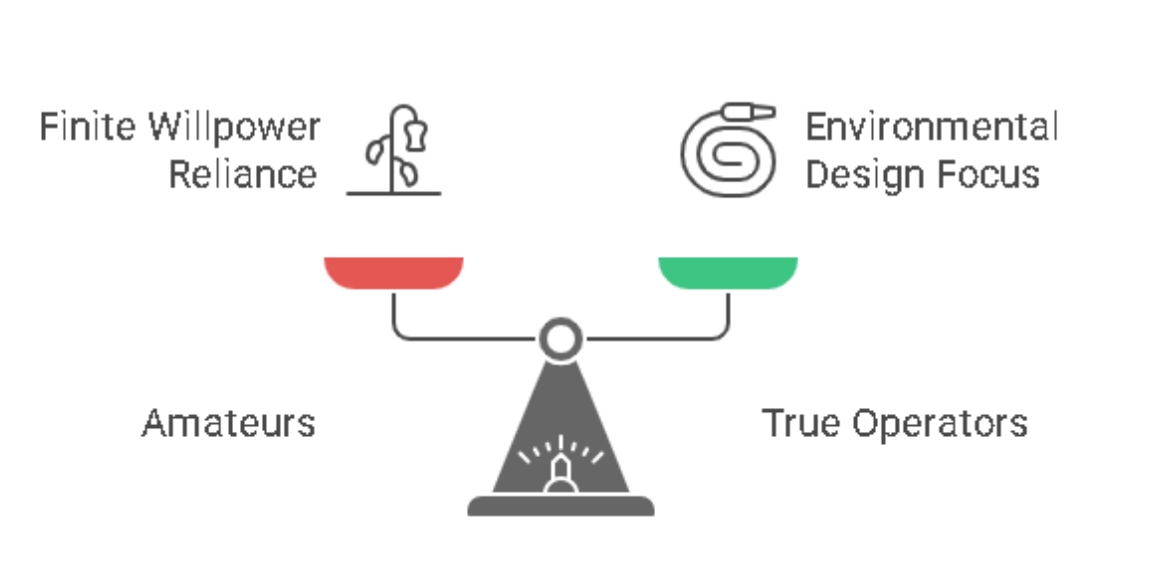
The Digital Monastery: Your environment will dictate your behavior. Create purpose-built digital spaces. Use separate devices or browser profiles for "deep work" vs. "shallow tasks." Use app blockers on your devices not as punishment, but as guardrails that make focus the default state. The goal is to make it impossible to fail.
Choice Architecture: Eliminate decision paralysis. Pre-load your days, aligning tasks with your peak energy cycles, not just your to-do list. Pre-script responses to typical distractions. Use hot key software to script your responses to common distractions. Use Automation software for routine tasks or eliminate low-value decisions so 100% of your cognitive horsepower is reserved for high-stakes problem-solving.
The "Recharge" Trigger: Link your recovery protocols to your work. Finished a deep work block? The trigger is a 5-minute walk outside. Closed a major deal? The trigger is a 20-minute session of complete disconnection. Weave the maintenance directly into the performance, creating a closed loop of excellence.
Pillar 3: Control the Board by Controlling Access
No one values what they can have all the time. Time to make your unavailability a measure of your value. Burnout is a disease of accessibility. Your boundaries are not defensive walls; they are offensive weapons of focus and positioning.
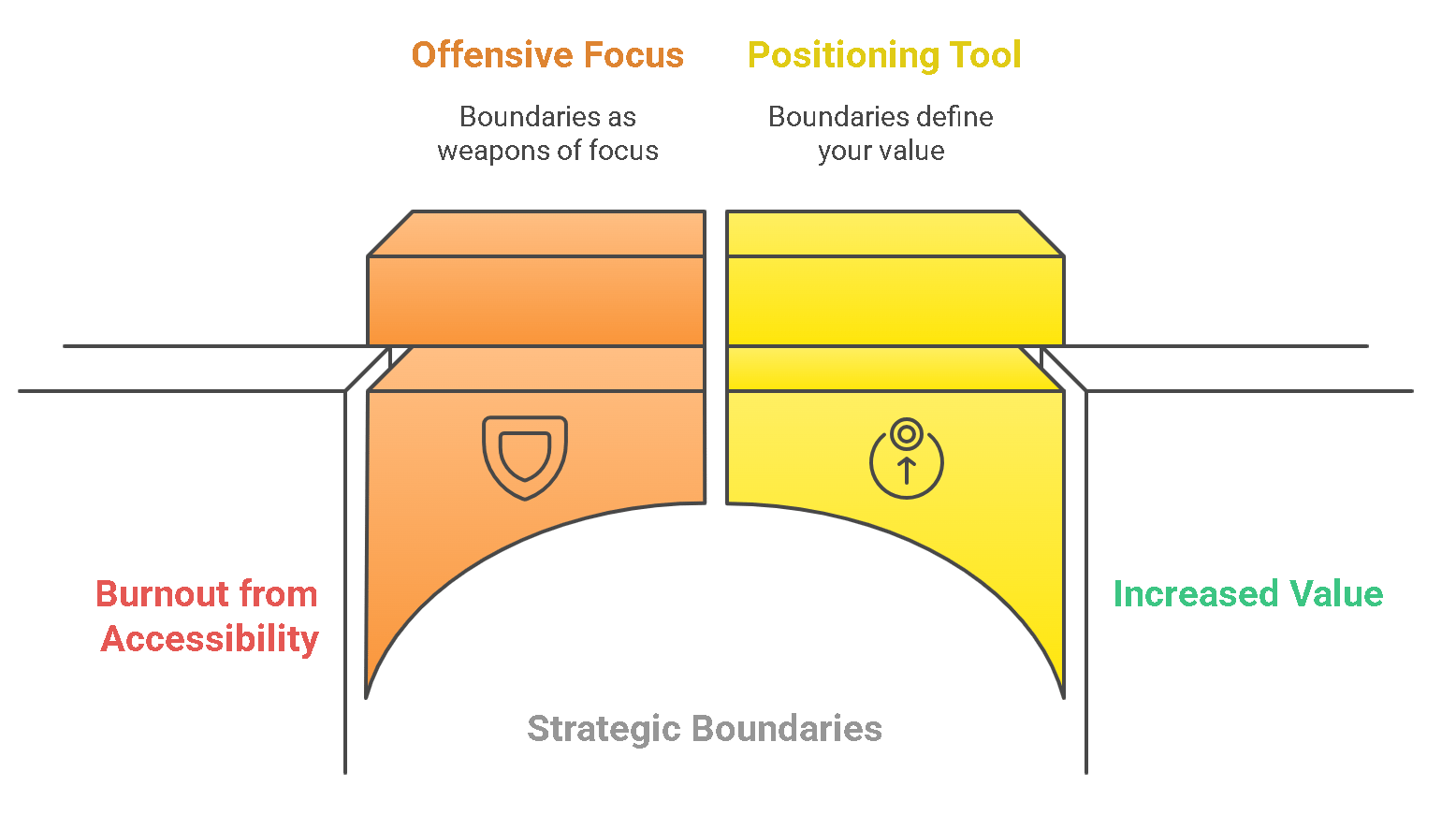
The Value Firewall: Frame your boundaries not as needs, but as strategic assets. "To deliver the high-quality strategic insight you're paying for, I require 48 hours of uninterrupted focus after receiving the final brief. This ensures you don't get a rushed, mediocre answer." You're not saying you're unavailable; you're saying your focus is a premium product.
The "No" Protocol: Develop a clear, ruthless filter for all inbound requests. Does this opportunity align with your highest-leverage objective? If not, the answer is a swift, unapologetic "no." Every "yes" to a low-value task is a "no" to a game-changing one.
Time as a Weapon: Use time blocking to communicate your priorities to the world. When your calendar shows "UNAVAILABLE: DEEP STRATEGIC WORK," it signals that your focus is a non-negotiable asset. You are teaching others how to interact with a high-performance system.
You're not broken; your system is obsolete.
Burnout was never a personal failing—it's part of a rigged game designed to extract energy and focus from you until there’s nothing left. The irony, Gallup’s global analysis estimates $322 billion in annual costs from turnover and lost productivity is linked to burnout.
Spa weekends won’t save you. A tighter calendar won’t save you. But when you rebuild with antifragile systems, something flips: clarity returns, creativity compounds, and you stop reacting to chaos—you start shaping & bending it to your will. Competitors flail, clients chase, opportunities open because you can see the board two moves ahead.
This isn’t about survival. It’s about becoming the kind of operator who resonates with every challenge and grows stronger under pressure.
The grind chews up the average. You’re not average. You’re here to adapt, to rise, to dominate.
Your move, primate.
Sources
Epel, E. S., Crosswell, A. D., & Mayer, S. E. (2018). More than a feeling: The role of positive emotions in promoting resilience in the face of stress. Health Psychology, 37(1), 21–29. https://escholarship.org/content/qt6n05k8fv/qt6n05k8fv.pdf
Frattaroli, J. (2006). Experimental disclosure and its moderators: A meta-analysis. Psychological Bulletin, 132(6), 823–865. https://bpb-us-e2.wpmucdn.com/faculty.sites.uci.edu/dist/c/602/files/2019/08/Frattaroli-psych-bulletin-2006.pdf
Gallup. (n.d.). Employee wellbeing is key for workplace productivity. Retrieved September 14, 2025, from https://www.gallup.com/workplace/215924/well-being.aspx
Gallup, & Workhuman. (2022). Amplifying wellbeing at work and beyond through the power of recognition. https://assets.ctfassets.net/hff6luki1ys4/Qu9UUxsvV9iJy0uN23M6t/acf085b6de297317538bd43de686d023/amplifying-wellbeing-at-work-and-beyond-through-recognition.pdf
Gavelin, H. M., Viström, E., & Neely, A. S. (2021). Cognitive function in clinical burnout: A systematic review. Work & Stress, 35(4), 317–341. http://www.diva-portal.org/smash/get/diva2:1749422/FULLTEXT01.pdf
Koe, D. (2023a, April 20). A complete knowledge base of HUMAN 3.0. The Koe Letter. https://thedankoe.com/letters/a-complete-knowledge-base-of-human-3-0/
Lembke, A. (2021). Dopamine nation: Finding balance in the age of indulgence. Dutton.
Maslach, C., Schaufeli, W. B., & Leiter, M. P. (2001). Job burnout. Annual Review of Psychology, 52, 397–422. https://www.researchgate.net/profile/Wilmar_Schaufeli/publication/228079161_Job_Burnout/links/09e4150abe2b2b3715000000/Job-Burnout.pdf
Ogden, P., Minton, K., & Pain, C. (2006). Trauma and the body: A sensorimotor approach to psychotherapy. W. W. Norton & Company.
Pennebaker, J. W., & Smyth, J. M. (2016). Opening up by writing it down: How expressive writing improves health and eases emotional pain (3rd ed.). Guilford Press.
Porges, S. W. (2011). The polyvagal theory: Neurophysiological foundations of emotions, attachment, communication, and self-regulation. W. W. Norton & Company.
Ryff, C. D. (2014). Psychological well-being revisited: Advances in science and practice. Psychotherapy and Psychosomatics, 83(1), 10–28. https://pmc.ncbi.nlm.nih.gov/articles/PMC4241300/
Sapolsky, R. M. (2017). Behave: The biology of humans at our best and worst. Penguin Press.
van der Kolk, B. A. (2014). The body keeps the score: Brain, mind, and body in the healing of trauma. Viking.
Reply